Work

Projects and worked examples.

Real engagements, told without client specifics, and six worked examples of how analysis fits into a wider engineering investigation.

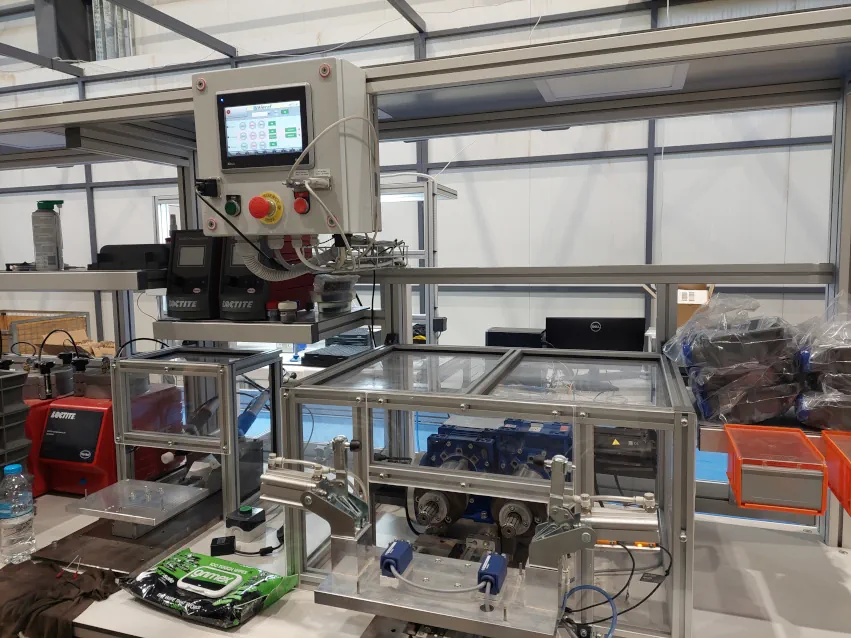
Assembly station with sealant dispensing and clamping fixtures
Projects

Some are one service. Some grew into many.

Assembly station with thread-sealant dispensing and clamping fixtures
Integrated project

A production line for housing assemblies for meters

A Greek manufacturer bidding to supply housing assemblies to a multinational metering company. The support was built up step by step over the life of the project:

  • Consulting on the tender process
  • Support during the customer's audit
  • Quality and production procedures
  • Design and construction of the assembly line and its fixtures
  • All line automation: PLCs, HMIs, PCs, communications, databases, links to legacy and new machinery
  • Custom software to program and monitor the line
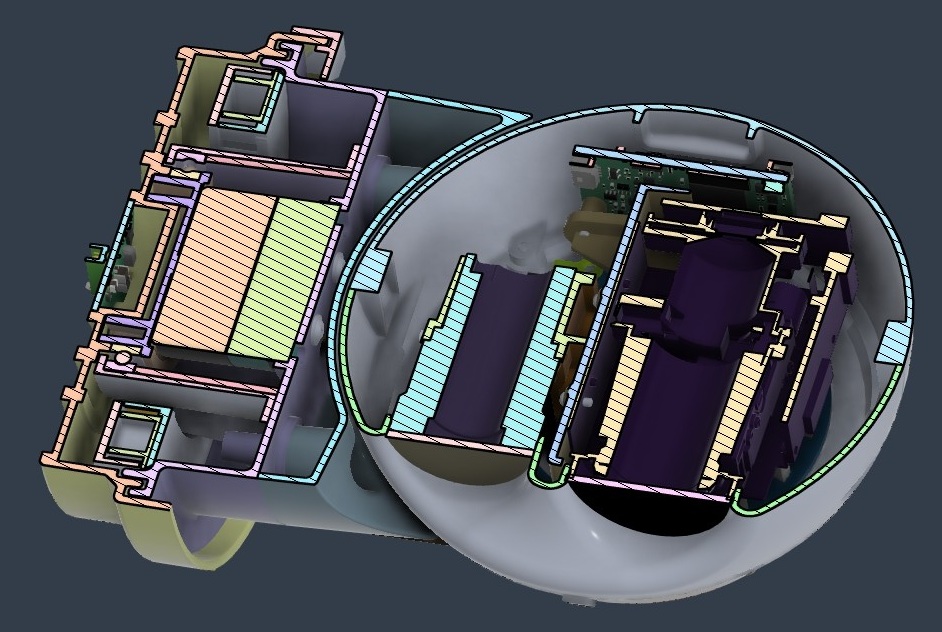
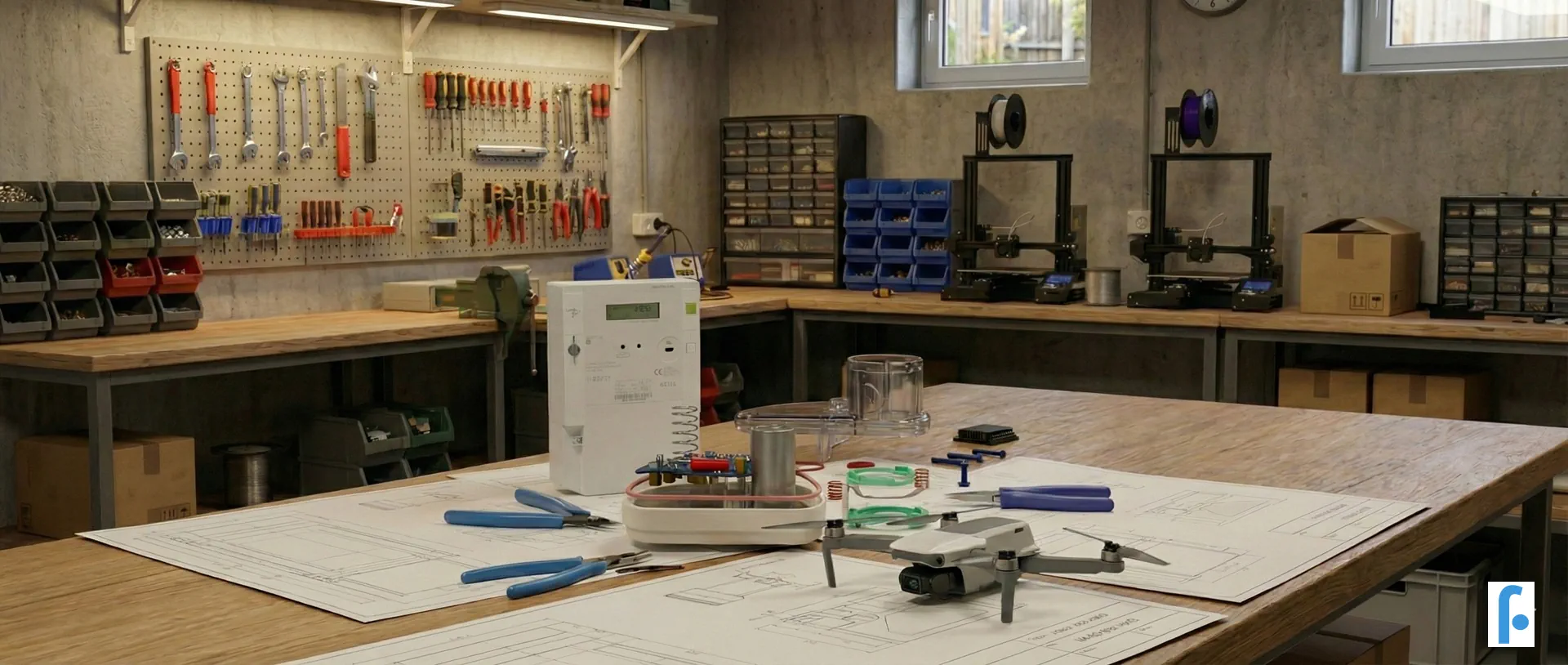
Section view of a 3-axis gimbal assembly
Product engineering

A 3-axis gimbal, designed for serial moulding

Complete design and modelling of a 3-axis gimbal. The parts are engineered for serial production by injection moulding, with parallel variants for 3D-printed functional prototypes. FEA checks the structural integrity of the modelled assembly before tooling is committed.

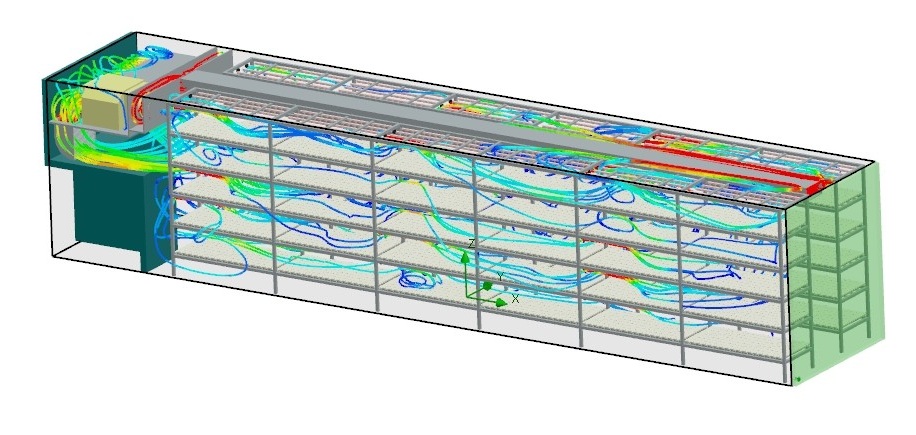
CFD airflow streamlines inside a container with cultivation racks
CFD · Mechanical design

A hydroponic laboratory inside a shipping container

Responsibility for designing and optimising the climate and ventilation system, and for the mechanical design of everything inside the container. CFD shows how air moves between the cultivation racks, where it stagnates and where it short-circuits, so the layout and air distribution are corrected before construction.

Product development of injection-moulded components
Product design · Consulting

A household-appliance maker bringing moulding in-house

Everything related to the company's injection-moulded parts: designing and redesigning bought-in parts, improving products with new moulded components such as a desktop grill, a moulded base and a handle, and management-level consulting on how its own injection moulding department should evolve and be set up.

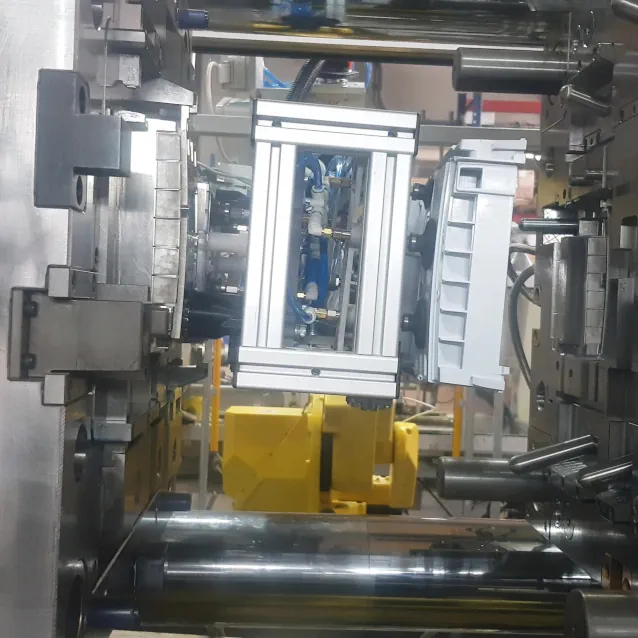
Robot end-of-arm tool between two open moulds in an overmoulding cell
Robotic automation

A robotic cell linking two moulding machines

A 6-axis robot transfers parts between two injection moulding machines to produce overmoulded components. The work covered the cell design, the end-of-arm tooling, custom peripheral equipment and the control integration of the machines.

Worked examples

How FEA and CFD fit into a wider engineering investigation.

Typical situations, described the same way: the request, what a complete assessment has to consider, what simulation adds, and what decides the outcome.

Product redesign · Material optimisation

Reducing the material in a plastic housing

A manufacturer wants to use less material in a plastic housing. The question is not simply whether a thinner wall gives lower stress.

A complete assessment considers
  • The actual loading conditions
  • Mounting and assembly requirements
  • Manufacturing limitations
  • Warpage and dimensional stability
  • Local reinforcement options
  • Material properties
  • Required stiffness
  • Expected service conditions
  • The cost benefit of the change
What FEA adds

It compares alternative designs and shows where material can realistically be removed.

What decides

The numerical results together with the practical requirements of manufacturing and use.

Product upgrade

An existing product for a higher load

A customer asks for an existing product with a higher load capacity. Redesigning the whole product is rarely the answer.

A complete assessment considers
  • Which components see the largest increase in load
  • Which areas may become critical
  • Whether the existing geometry remains adequate
  • Where reinforcement or a material change is needed
  • Secondary effects elsewhere in the assembly
What FEA adds

A detailed understanding of load paths and structural response.

What decides

Changes are targeted where they are needed, instead of redesigning everything.

Failure investigation

Recurring failures in a pump or fluid-handling system

A manufacturer experiences repeated failures. A useful investigation starts from the operating conditions and the failure history, not from building a CFD model.

A complete assessment considers
  • Pump and system specifications
  • Flow rate, pressure, head and operating conditions
  • Pipework and system resistance
  • Installation and operating practices
  • Engineering calculations
  • Mechanical loads and structural implications where relevant
What CFD adds

Detail where the flow behaviour itself needs further investigation.

What decides

The engineering causes behind the failures, and which changes or further measurements are justified. Simulation is one possible tool within the investigation, not a substitute for understanding the system.

Plastic part design

Developing a reliable plastic snap-fit

A manufacturer needs a snap-fit for a new product. Several requirements interact.

A complete assessment considers
  • Assembly force
  • Retention force
  • Elastic deformation
  • Permanent deformation
  • Fatigue or repeated assembly
  • Material selection
  • Manufacturing feasibility
  • Tolerances
  • Temperature effects
What FEA adds

It compares alternative geometries and estimates deformation, stress and forces under defined assumptions.

What decides

Design iterations are settled before tooling, then confirmed by physical testing, often on printed prototypes.

Ventilation · Thermal comfort

Natural ventilation instead of mechanical cooling

A building or product designer wants to use natural airflow and depend less on mechanical cooling.

CFD may help explore
  • Opening and window arrangements
  • Air inlet and outlet locations
  • Wind direction and velocity
  • Internal airflow patterns
  • Natural convection
  • Stagnant or poorly ventilated regions
  • The influence of geometry and thermal conditions
What CFD adds

It investigates defined scenarios and supports design decisions about openings and layout.

Limits

Real environmental conditions vary. CFD can investigate defined scenarios, but it cannot guarantee performance under every possible weather condition.

CFD and FEA combined

Wind loading on a small structure

A manufacturer is developing a small structure or product that will be exposed to wind.

An integrated study may involve
  • Defining the intended installation conditions
  • Establishing the relevant wind scenarios
  • Aerodynamic forces from CFD or appropriate engineering methods
  • Applying those loads to a structural model
  • Stresses, deformations and critical components
  • Comparison with the applicable design requirements
What simulation adds

Loads from the flow model feed the structural model, so the whole chain from wind to stress is traceable.

Limits

Where formal certification, regulatory compliance or public safety obligations apply, the analysis must be performed within the relevant standards and professional framework.

Discuss your engineering problem.

Tell us what you are developing, changing or trying to fix. We first look at the engineering question, then say plainly what is worth doing: a calculation, a design review, a test, a simulation, or a combination.

Free first discussion Scoped to the question NDA on request