
Special machines, robotic cells and fixtures, designed and built.
From a pneumatic fixture to a complete assembly line. We design and construct the mechanics, integrate the controls, and make new equipment work with the machines you already have.
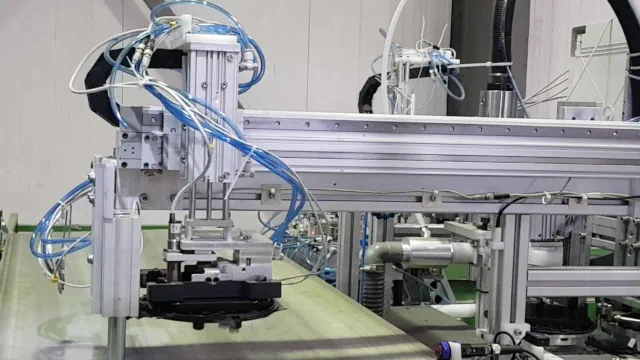
Automating the process you actually have.
Turning a manual process into an automated station or line takes mechanical design, controls and a clear view of the process itself. We build machines around processes such as:
- Pick and place
- Screwing with torque control and monitoring
- Glue and sealant dispensing
- Torque and leak testing
- Ultrasonic welding
- Trimming and machining
- Loading and unloading moulding machines
- Inspection
Standard components where they fit; custom mechanics, designed and built, where they do not.
Video: a custom automation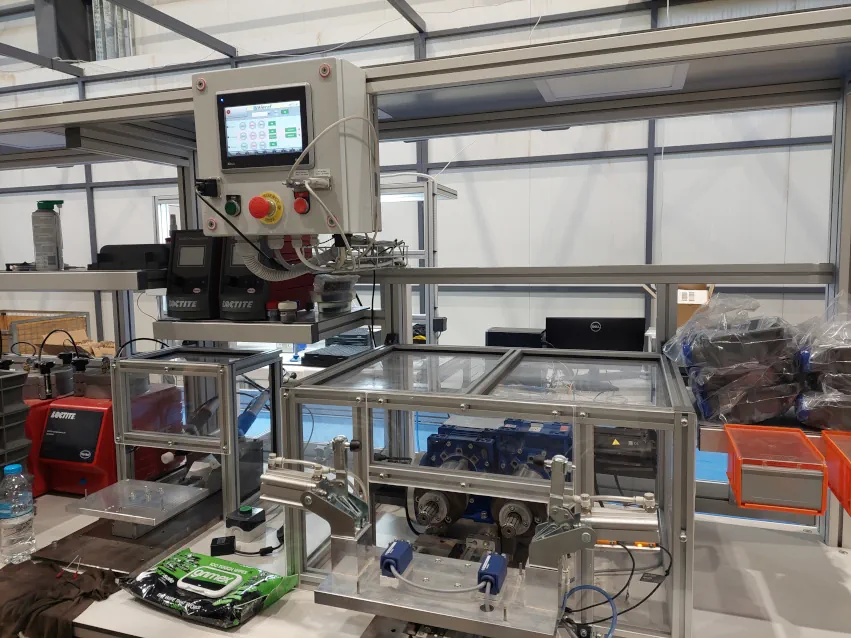
A robotic cell is a solution, not a set of equipment.
Standard robotic applications such as palletising are already affordable. We do the same for special applications that need intricate solutions. A typical cell includes:
- The robot arm. We prefer FANUC robots.
- End-of-arm tooling. Designed and built, often with printed parts.
- Cell control. A central PLC, typically Beckhoff TwinCAT, coordinating all devices, with a touch-screen interface.
- Safety. Designed to the applicable safety requirements, through the robot controller or certified safety equipment.
- Existing machinery. The minimum upgrade needed to bring traditional machines into the cell.
- Custom and auxiliary equipment. Built by us or integrated from other suppliers, such as vibratory feeders.
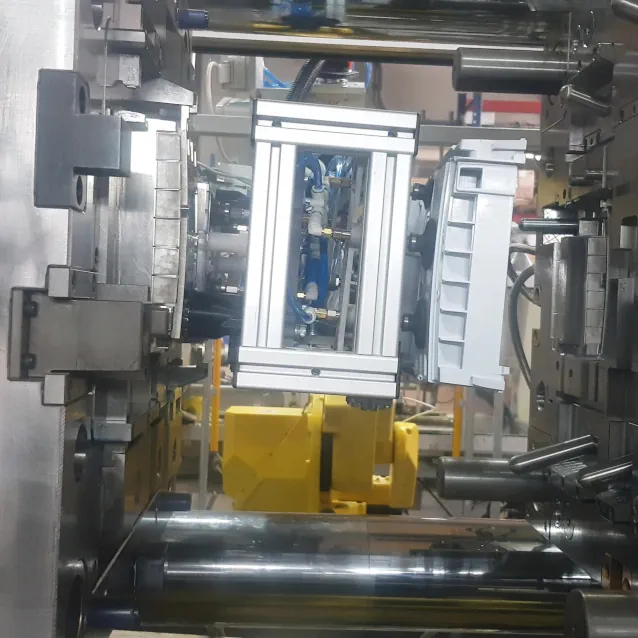
Also delivered
A robotic machining cell: a FANUC 6-axis robot with a servo spindle under a Beckhoff PLC, programmed from a common CAD/CAM system.
The fixture decides the quality of the operation.
Assembly, clamping, test and inspection fixtures, grippers and small special machines, designed for repeatability and built to last in production.
- Welded frames with CNC-machined aluminium and steel components
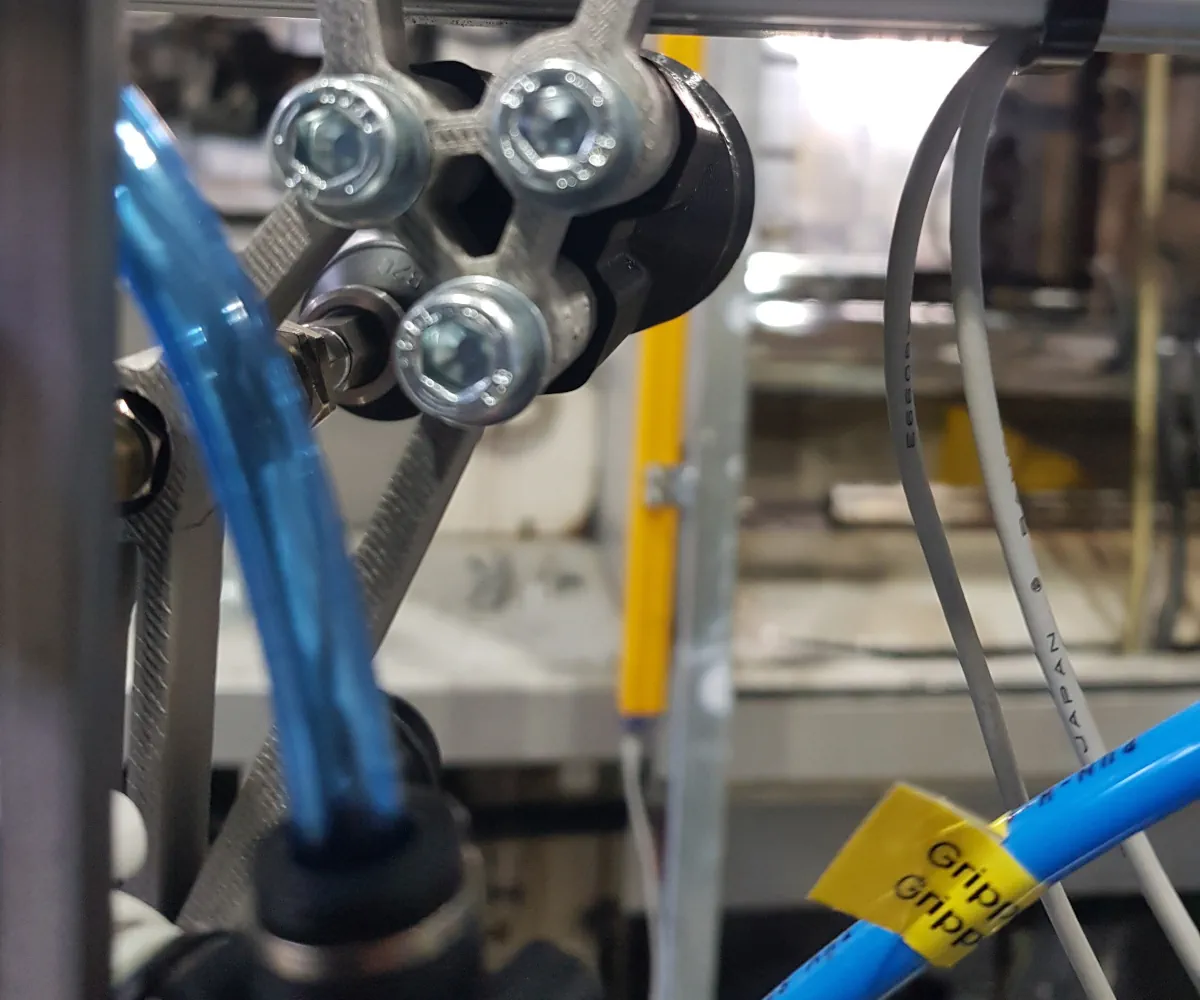
- Printed parts with metal inserts where they are the better solution
- Structural checks by FEA where loads or stiffness matter
- Sensors and interlocks so the fixture confirms the part is right
Discuss your engineering problem.
Tell us what you are developing, changing or trying to fix. We first look at the engineering question, then say plainly what is worth doing: a calculation, a design review, a test, a simulation, or a combination.