
FEA · Finite element analysis

Non-linear analysis (FEA)

When parts touch, slide, deform a lot or yield, a linear model gives the wrong answer. Non-linear analysis follows what really happens: contact, large deformations and material behaviour beyond the elastic range.

What it is

Three sources of non-linearity.

  • Contact. Parts that touch, separate or slide against each other: snap-fits, clamps, bolted and press-fit joints, seals.
  • Large deformations. Thin walls, flexible arms and springs whose stiffness changes as they deform, and buckling.
  • Material. Plastic deformation of metals and thermoplastics, and hyperelastic materials such as rubber.

Non-linear models need more input data and more checking than linear ones: material curves, friction, the load sequence. We say which of these the answer depends on, and how well they are known.

Typical questions

  • Is a snap-fit likely to see excessive deformation or stress?
  • What forces or deformations occur during assembly?
  • How is the load shared between parts in contact?
  • Will the part deform permanently under an overload?
  • Does a seal keep enough contact pressure?
  • At what load does a thin-walled part buckle?
Worked example

How FEA fits into a wider engineering investigation.

Plastic part design

Developing a reliable plastic snap-fit

A manufacturer needs a snap-fit for a new product. Several requirements interact.

A complete assessment considers
  • Assembly force
  • Retention force
  • Elastic deformation
  • Permanent deformation
  • Fatigue or repeated assembly
  • Material selection
  • Manufacturing feasibility
  • Tolerances
  • Temperature effects
What FEA adds

It compares alternative geometries and estimates deformation, stress and forces under defined assumptions.

What decides

Design iterations are settled before tooling, then confirmed by physical testing, often on printed prototypes.
Open-source FEA

Professional analysis, without enterprise licence costs.

Commercial FEA packages often cost thousands of euros a year per seat, and that cost ends up in the price of every study. We work with a mature open-source toolchain instead, so an SME pays for engineering time, not for software licences.

The solver, CalculiX, is a long-established finite element code that reads the widely used Abaqus-style input format.

Honest about the limits

Where a question genuinely needs a feature that only a commercial package offers, we say so before the work starts.

The workflow

  1. Geometry: FreeCAD

    The CAD model is prepared for analysis and simplified where details don't affect the answer.

  2. Set-up and mesh: PrePoMax with Netgen

    Materials, loads, supports and contacts are defined, each assumption is recorded, and the mesh is refined where stresses concentrate.

  3. Solution: PrePoMax with CalculiX

    The model is solved and checked: convergence, mesh sensitivity and plausibility against hand calculations.

  4. Post-processing: PrePoMax and ParaView

    Stresses, displacements and reactions are extracted and presented as clear images and figures for the decision.

Product names are trademarks of their respective owners.

Related projects

A real project.

Product engineering

A 3-axis gimbal for serial production

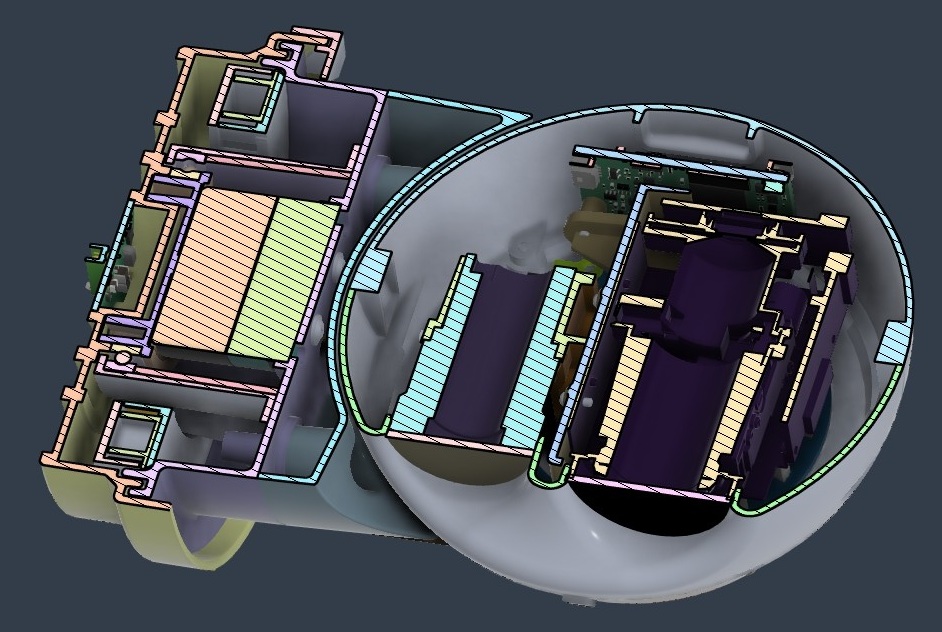
Parts designed for injection moulding, checked with FEA before tooling is committed.
See the project

All projects: FEA

Do you have an engineering question? Let's discuss it.

Tell us what you are developing, changing or trying to fix. We first look at the engineering question, then say plainly what is worth doing: a calculation, a design review, a test, a simulation, or a combination.

Complimentary first site visit & analysis Custom proposal, regardless of project scale Strict confidentiality & NDA protection